Introduction
In the place where water gushes from the ground, there also a man drives his tent stake—and so lays the foundation of a city. Where the easiest ground to travel lies, there also a wayfarer walks—and so a highway begins. The rains run through immovable ravines, and beside that river people cultivate their fields and water their livestock.
Geography affects history. Trace any civilization back to its origin, and geography takes center stage. Be it a strategic military position, an abundant water supply, or a convenient traveling location, geography determines, by in large, where historical events occur.
This study will discuss the significance of Shechem, a city in central Israel. Shechem’s geography paves the way for a discussion of its historical, and ultimately, its spiritual significance even still today.
The Geographical Significance of Shechem
Located in the Hill Country of Ephraim, the city of Shechem played a vital role in the history of Israel. This location, in the middle of the nation, provided the most important crossroads in central Israel. The city lay along the northern end of “The Way of the Patriarchs.” This road, also called the “Ridge Route” (because it followed a key mountain ridge stretching 50 miles south), traveled from Shechem through Shiloh, Bethel/Ai, Ramah, Gibeah, Jerusalem, Bethlehem, and Hebron. This route appears continuously in the Biblical text.
The crossroads Shechem offered led in three directions. In addition to the Ridge Route leading south, the road also passed directly through Shechem, which lay on the northeastern side of Mount Gerizim and just south of Mount Ebal. The road was thus forced to pass through the city located in the valley between these two mountains. From there the road descended to the Sharon Plain, reaching the “International Highway” (the Via Maris) at Socoh. The third road from Shechem led northeast along the Wadi Beidan to Tirzah, where it descended east to the Jordan Valley via the Wadi Faria. Ultimately, as the road passed through the Jabbok Valley, it reached the Transjordanian Highway.
|
|
Because of its central location and vital crossroads, Shechem saw a lot of traffic in its history. Thus Shechem often found itself in major events in the Biblical narrative.
The Historical Significance of Shechem
Shechem first steps on the pages of Scripture as Abram enters the land of Canaan. From Ur, across the Fertile Crescent and down into Canaan, the Bible mentions Shechem as the first city to which Abram came (Gen. 12:6). Here Abram built an altar to the Lord, and here God confirmed His promise to give the land to Abram. The old man could have easily seen much of the Promised Land if he scaled Mount Ebal and scanned the horizon.
The areas in Canaan which Abram spent most of his life were along the Route of the Patriarchs, namely in Shechem (Gen 12:6), Bethel and Ai (12:8; 13:2), Hebron (13:18; 14:13), and in the Negev (13:1; 20:1, notably Gerar).
Abram’s grandson, Jacob, came to Shechem after he returned from Padan-Aram, undoubtedly tracing the traditional same steps of his grandfather. He and his family traveled through the Jabbok Valley, crossed the Jordan, camped at Succoth, and ascended through the Wadis Faria and Beidan to Shechem.
|
|
Here Jacob (re-named “Israel”) built an altar and named it “El-elohe-israel,” meaning “God, the God of Israel” (Gen. 33:17-20). Here also Jacob dug a well for his many herds. This well is still there today.
While Jacob’s family lived in Shechem, Jacob’s daughter, Dinah, was raped by a man named Shechem, the son of the ruler, Hamor. Jacob’s two sons, Levi and Simeon, made a deceptive pact with the males of the city and slaughtered them all in revenge of Dinah.
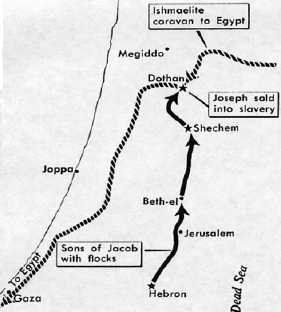
Years later, Jacob sent his 17 year-old son, Joseph, from Hebron to check on his brothers as they kept the flocks in Shechem (Gen 37:12-14). After Joseph arrived, having undoubtedly traveled up the Ridge Route, he discovered his brothers had moved on to the lush area of Dothan; so he went to find them (Gen 37:15-17). His brothers, filled with hatred, sold Joseph to some Ishmaelite traders who, coming through the Dothan pass, were headed for Egypt along the Via Maris. God used this sad turn of events to eventually take the entire family of Israel to Egypt, protecting and multiplying them. Joseph’s last memories of Israel, before his brothers sold him, was of Shechem and Dothan. He believed that God would one day return the nation to Canaan, and so he gave the command for his bones to be carried back with them and buried there (Gen 50:25).
|
|
After Moses brought the nation of Israel out of Egypt, God commanded Israel to enter the Promised land and go to Shechem to pronounce the blessings and the curses of the Mosaic Covenant on the nation (Deut. 27:4). Joshua did this, and dividing the nation, “Half of them stood in front of Mount Gerizim and half of them in front of Mount Ebal” (Josh. 8:33). From Mount Ebal, they shouted the curses if they disobeyed the law, and from Mount Gerizim, they shouted the blessings if they obeyed. And there on Mount Ebal, Joshua built an altar to God, and on a pillar of stones he wrote a copy of the law (Josh. 8:30-35).
At the end of the conquest Joshua gathered the whole nation to Shechem again, reminding them of their previous pledge and the blessings and curses they themselves pronounced. He then set up another stone in Shechem, saying: “Behold, this stone shall be for a witness against us, for it has heard all the words of the LORD which He spoke to us; thus it shall be for a witness against you, lest you deny your God” (Josh. 24:27).
Joseph was the father of Ephraim and Manasseh, and so Joshua “buried the bones of Joseph, which the sons of Israel brought up from Egypt, at Shechem, in the piece of ground which Jacob had bought from the sons of Hamor . . . and they became the inheritance of Joseph’s sons” (Josh. 24:32).
Joshua also designated Shechem as a city of refuge. Probably because of its ease of access in a time of possible flight, a manslayer could take refuge from his avenger in Shechem, one of the three cities of refuge on the west side of the Jordan (Josh. 20:7; 21:21; 1 Chr. 6:67).
During the time of the judges, Abimelech, a son of Gideon, conspired with his maternal family to kill all other sons of Gideon and have himself proclaimed king of Shechem (Judges 9:6). But Jotham, the youngest son of Gideon, escaped by hiding. And at Abimelech’s coronation, Jotham climbed Mount Gerizim and shouted a curse on Shechem for Abimelech’s sin. This curse proved true, for the citizens of Shechem formed a conspiracy against Abimelech, and he completely destroyed the city. But when Abimelech went to Thebez and stormed the tower, a woman dropped an upper millstone on his head and cracked his skull (Judges 9:53).
After the reigns of Saul, David, and Solomon, Rehoboam, the son of Solomon, “went to Shechem, for all Israel had come to Shechem to make him king” (1 Kings 12:1). But because Rehoboam followed the foolish and harsh advice of the youths with whom he grew up, the nation divided at Shechem. Jeroboam shouted: “To your tents, O Israel” and separated the ten northern tribes from the southern kingdom of Judah (1 Kings 12:1,16).
|
|
Because Jerusalem was the only appointed place God allowed for worship, and since Jerusalem lay in Judah, Jeroboam set up a rival sanctuary in Bethel, complete with a golden bull image. This rival center would enable the northern tribes to worship without crossing the border into Judah. Ironically, this idolatrous center was just south of Shechem, where their forefathers and Joshua made the covenant to worship God alone (1 Kings 12:25-33).
Jeroboam chose Shechem as the capital for the Northern Kingdom, perhaps because of the significant history there for Ephraim. Shechem had great spiritual significance for Abraham, Jacob, Joseph, and Joshua. Also Shechem was situated on the essential crossroads along the Way of the Patriarchs. As discussed earlier, in addition to this crucial north-south road, another road also went northwest to the International Highway, and still another went east towards the Transjordanian Highway. It made a good choice for a capital.
A later king of Israel, Omri, chose Samaria as his capital because it was easy to defend. It had steep slopes all around the high hill on which the city sat. It also provided room for many people to live—perhaps 40,000—as the city covered 20 acres. It required cisterns for water supply, which was a major drawback in times of siege. It lay somewhat off the beaten path—about 5 or 6 miles off the International Highway—another asset in times of siege. It also conveniently lay along a major road to Shechem. Samaria enjoyed much produce since the valleys and nearby Dothan Plain were very fertile. All this combined made Samaria an ideal place for a capital. In fact, the trade was better in Samaria than in any other previous 3 capitals (Shechem, Penuel, Tirzah) chosen by Israel’s kings.
|
|
Samaria became significant in Shechem’s history because the people who later worshipped on Mount Gerizim came to be known as “Samaritans” (named after the capital Omri had chosen). After the Assyrians dragged the Northern Kingdom into exile in 722 BC, the Assyrians repopulated the area with a mixed breed—partly Jewish, partly Assyrian. These people did not know the Lord (2 Kings 17:24-41) and thus they continually struggled with idolatry.
When Judah returned from exile to the southern portion of the nation, the Samaritans requested to help rebuild the temple in Jerusalem. However Zerubbabel refused, and the Samaritans developed almost a cult—devoted only to the Pentateuch. They built their own temple on Mount Gerizim, which was immediately by Shechem. In 107 BC, John Hyrcanus further widened the rift between the Jews and Samaritans by destroying the Samaritan’s temple on Mount Gerizim.
By the time Jesus spoke to the Samaritan woman at Jacob’s well, near Shechem, the racial hatred between Jews and Samaritans was paramount. And the ensuing argument about the true place of worship—Gerizim or Jerusalem—was in full force (John 4:20).
The Spiritual Significance of Shechem:
Joshua’s Challenge
For a spiritual lesson from Shechem’s history, we look back at Joshua’s challenge to the nation in Joshua 24. “Then Joshua gathered all the tribes of Israel to Shechem, and called for the elders of Israel and for their heads and their judges and their officers; and they presented themselves before God” (Josh. 24:1).
Joshua called the nation to Shechem because significant things occurred there before. As mentioned before, it was here that Abram, the father of the Jewish nation, first came when he came to the land. And here God promised him the land was to be his. It was also here that Abram’s grandson, Jacob, settled, and here he buried all his idols—which will be significant we will see later. Moreover, Joshua called all Israel to Shechem at the end of the conquest, because Joshua and the same group came to Shechem at the beginning of the conquest to shout the blessings and curses.
Joshua called them together again to this historically significant site, because what he had to tell them preached louder in Shechem that it could anywhere else: “And Joshua said to all the people, ‘Thus says the LORD, the God of Israel, from ancient times your fathers lived beyond the River, namely, Terah, the father of Abraham and the father of Nahor, and they served other gods’“ (v 2). He starts to review their history by reminding them that Abram, the father of the Jewish nation, was an idolater prior to becoming the father of the Jewish nation. That is a pretty humble beginning.
It is often easy for us as believers to get proud at what marvelous people we have become. Joshua gives us all a good reminder: Remember where you’ve come from. God would later tell King David: “I took you from the pasture, from following the sheep, that you should be ruler over My people Israel” (2 Sam. 7:8). In the New Testament Paul writes: “Brothers, think of what you were when you were called. Not many of you were wise by human standards; not many were influential; not many were of noble birth” (1 Cor. 1:26). What made the difference? God’s grace. God’s grace shows that none of that matters if you put your faith in Him.
Joshua goes on to note, whatever good there is in us now, remember whose doing it is. Not ours, but God’s. Joshua does not just remind them of Israel’s history but also of God’s grace in Israel’s history. Notice all the capital I’s the Lord mentions:
Then I took your father Abraham from beyond the River, and led him through all the land of Canaan, and multiplied his descendants and gave him Isaac. And to Isaac I gave Jacob and Esau, and to Esau I gave Mount Seir, to possess it; but Jacob and his sons went down to Egypt. Then I sent Moses and Aaron, and I plagued Egypt by what I did in its midst; and afterward I brought you out. And I brought your fathers out of Egypt, and you came to the sea; and Egypt pursued your fathers with chariots and horsemen to the Red Sea. But when they cried out to the LORD, He put darkness between you and the Egyptians, and brought the sea upon them and covered them; and your own eyes saw what I did in Egypt. And you lived in the wilderness for a long time. Then I brought you into the land of the Amorites who lived beyond the Jordan, and they fought with you; and I gave them into your hand, and you took possession of their land when I destroyed them before you. Then Balak the son of Zippor, king of Moab, arose and fought against Israel, and he sent and summoned Balaam the son of Beor to curse you. But I was not willing to listen to Balaam. So he had to bless you, and I delivered you from his hand. And you crossed the Jordan and came to Jericho; and the citizens of Jericho fought against you, and the Amorite and the Perizzite and the Canaanite and the Hittite and the Girgashite, the Hivite and the Jebusite. Thus I gave them into your hand. Then I sent the hornet before you and it drove out the two kings of the Amorites from before you, but not by your sword or your bow. And I gave you a land on which you had not labored, and cities which you had not built, and you have lived in them; you are eating of vineyards and olive groves which you did not plant (vv. 3-13).
Joshua demonstrates not only the grace of God in calling them out of a pagan past, but also the faithfulness of God in taking care of them after their redemption.
It is at this point Joshua stops speaking for the Lord and begins speaking for himself, giving the implications and applications from looking at the past. “Now, therefore, fear the LORD and serve Him in sincerity and truth; and put away the gods which your fathers served beyond the River and in Egypt, and serve the LORD” (v 14).
Twice in this verse Joshua gives the command: “serve the LORD.” In fact it is the main command of the whole chapter. “Therefore,” he says, in light of the fact that every inch of success has been God’s grace to you, “fear the LORD and serve Him in sincerity.” The Hebrew word for sincerity suggests “fullness or completeness;” it is the idea that one is on the inside what he is on the outside. Joshua says to serve the Lord in sincerity, not in hypocrisy. Joshua also says to serve the Lord in “truth;” the Hebrew word for truth is`Emet, which refers to a truth that has proven itself reliable. You could translate it “faithfulness” or even “reliability.” `Emet is a word that describes God; He is a God of truth, so our relationship to God must be according to truth.
Interestingly, Jesus said the same thing in this same spot when He told the woman at Jacob’s well that the worshippers God seeks are those who worship Him in “spirit and in truth” (John 4:23-24)—worship with one’s inside, the spirit, not just the outside. Jesus said: “in spirit and in truth;” Joshua said: “in sincerity and truth.” I cannot help but wonder if Jesus had Joshua’s words in mind as Jesus sat near Shechem where Joshua spoke.
Joshua also tells them to “put away the gods which your fathers served.” He calls them together at Shechem as if to say: “Remember how Abram put away his idols and came here, and remember God’s promise to Abram in this spot? Remember how Jacob put away his idols in this spot? Remember how you yourselves shouted the blessings and the curses in this spot? Do you want God’s blessing in the land? Then you too put away your idols in this spot.” We should put away what is wrong and embrace what is right—or better, who is right, because Joshua says again at the end of v 14: “serve the LORD.”
Then comes the most famous verse in the whole book of Joshua: “And if it is disagreeable in your sight to serve the LORD, choose for yourselves today whom you will serve: whether the gods which your fathers served which were beyond the River, or the gods of the Amorites in whose land you are living; but as for me and my house, we will serve the LORD” (24:15). Almost every plaque I have seen which quotes this verse says: “Choose for yourselves today whom you will serve... but as for me and my house, we will serve the LORD.” It always leaves off the part about: “whether the gods which your fathers served which were beyond the River, or the gods of the Amorites in whose land you are living.” I think omitting the lines lessens the punch and the point of the statement.
First Joshua says: “the gods which your fathers served which were beyond the River.” You can choose to follow the perhaps bad example of your parents and make the same mistakes they have made by being loyal to the things they were loyal to. Then he says: “or the gods of the Amorites in whose land you are living.” You can choose to follow the culture you live in and be loyal to their priorities.
But Joshua’s point is choose for yourselves; in fact, those are his very words. Do not do something just because mommy and daddy did it; mommy and daddy could have been wrong. Do not take as your own the values of our entertainers or actors just because they are good performers; think for yourself. Choose for yourself.
And I think the principle should also apply even to those who grew up under parents who did a good job—parents who taught about Jesus and how He died for our sins. We still need to choose for ourselves. We still need to come to a place where Jesus is our God, not just the God of our parents. The Bible speaks of the importance of having a personal relationship with Christ, not a surrogate relationship through our parents, peers, or pastor. God wants to know us personally. We have to take a personal ownership and responsibility with our relationship with God.
We should not think that because Joshua speaks of idols, and because we do not have wooden statues in our culture, that this text does not apply. I think that is the mistake made when the plaques quote this verse. Augustine once said: “Idolatry is worshipping anything that ought to be used, or using anything that is meant to be worshiped.”
Jonathan Edwards resolved: “that all men should live for the glory of God. Resolved second: That whether others do or not, I will.” Joshua says that regardless of what they chose, “as for me and my house, we will serve the LORD.”
Look at the people’s response:
And the people answered and said, “Far be it from us that we should forsake the LORD to serve other gods; for the LORD our God is He who brought us and our fathers up out of the land of Egypt, from the house of bondage, and who did these great signs in our sight and preserved us through all the way in which we went and among all the peoples through whose midst we passed. And the LORD drove out from before us all the peoples, even the Amorites who lived in the land. We also will serve the LORD, for He is our God” (vv. 16-18).
The people say that not only will Joshua and his house serve the Lord but “we also will serve the LORD.” Not because He was the God of their parents, but because He is, they say, “our God.”
“So Joshua made a covenant with the people that day, and made for them a statute and an ordinance in Shechem... Then Joshua dismissed the people, each to his inheritance” (vv. 25, 28).
As they left Shechem they were to remember the past and live in light of it. We too, as we live the lives God has given us, should remember from where God, in His grace, took us—from a down-hill slide to destruction into a relationship with His Son. We should remember how God, in His grace, has taken care of us since then in spite of our continued disobedience. And in light of God’s faithful past in our own lives, we should personally renew a whole-hearted commitment to the Lord today. That was Joshua’s challenge to Israel at Shechem, and it is a good one for us to heed as well.
Bibliography
Aharoni, Yohanan, and Micheal Avi-Yonah. The Macmillan Bible Atlas. New York: Macmillan. 1977.
Andersen, H. G. “Shechem,” The Zondervan Pictorial Encyclopedia of the Bible, Vol. 5. Grand Rapids: Zondervan, 1975-1976. 381-385.
Bimson, John J., ed. Baker Encyclopedia of Bible Places. Leicester: Inter-Varsity Press, 1995.
Cleave, Richard. The Holy Land Satellite Atlas, Vol. 1. Nicosia: Rohr Productions, 1999.
DeVries, LaMoine F. Cities of the Biblical World. Peabody: Hendrickson Publishers, 1997.
Douglas, J. D., and Merrill C. Tenney, eds. The New International Dictionary of the Bible. Grand Rapids: Zondervan, 1987.
Frank, Harry Thomas, Ed. Hammond’s Atlas of the Bible Lands. New Jersey: Hammond, Inc., 1984.
Rasmussem, Carl G. Zondervan NIV Atlas of the Bible. Grand Rapids: Zondervan, 1989.
Rousseau, John J. and Rami Arav. Jesus and His World: An Archaeological and Cultural Dictionary. Minneapolis: Fortress Press, 1995.


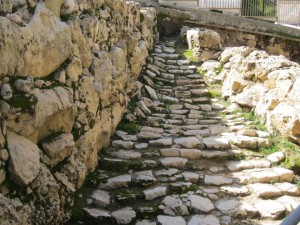 However, when the Crusaders invaded the Holy Land, the ancient Jewish community of Hebron was expelled from their homes. According to Benjamin of Tuleda, who traveled to Israel in 1170, Hebron was completely destroyed due to the fighting that occurred between the Crusaders and the forces of Saladin. He describes in his book
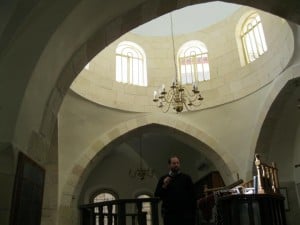 In 1775, the Hebron Jewish community would suffer from a blood libel accusation, where local Jews were falsely accused of murdering a local sheikh and were forced to pay significant blood money as a result, which adversely affected the economic situation of the Hebron Jewish community. Nevertheless,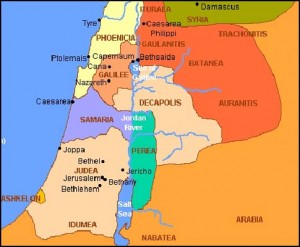

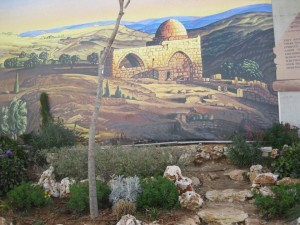 Bethlehem is the city where the Jewish matriarch Rachel is buried, where the famous convert to Judaism Ruth married Boaz, and was the birthplace of King David. It is mentioned 44 times in the Tanakh. Hebron, which until the 1929 massacre briefly interrupted the Jewish presence in the city, had an ancient Jewish community. It is one of the four holiest cities in the Jewish religion. It is the place where the Cave of the Patriarchs is located, which contain the remains of Sarah, Abraham, Isaac, Rebecca, Jacob, and Leah. Jews also believe that Adam and Eve are buried there. Hebron is also the city where King David was anointed king and ruled for seven years prior to the conquest of Jerusalem.